
Let's Talk Grease Traps: Everything You Need to Know
Welcome to Grease Trap School:
What Is a Grease Trap?
A grease trap is the unsung hero of every commercial kitchen. Its job is simple: catch fats, oils, and grease before they clog up your drains and Perth's sewer system.
As greasy wastewater flows through the tank, the fats and oils float to the top while cleaner water flows out to the sewer. Think of it as a bouncer for your plumbing — the grease gets stopped at the door.
Without a grease trap, all that bacon fat, cooking oil, and food waste eventually builds up inside pipes, causing blockages, bad smells, expensive repairs, and unhappy regulators.
That's why Water Corporation requires most cafes, restaurants, breweries, and food businesses to have one.
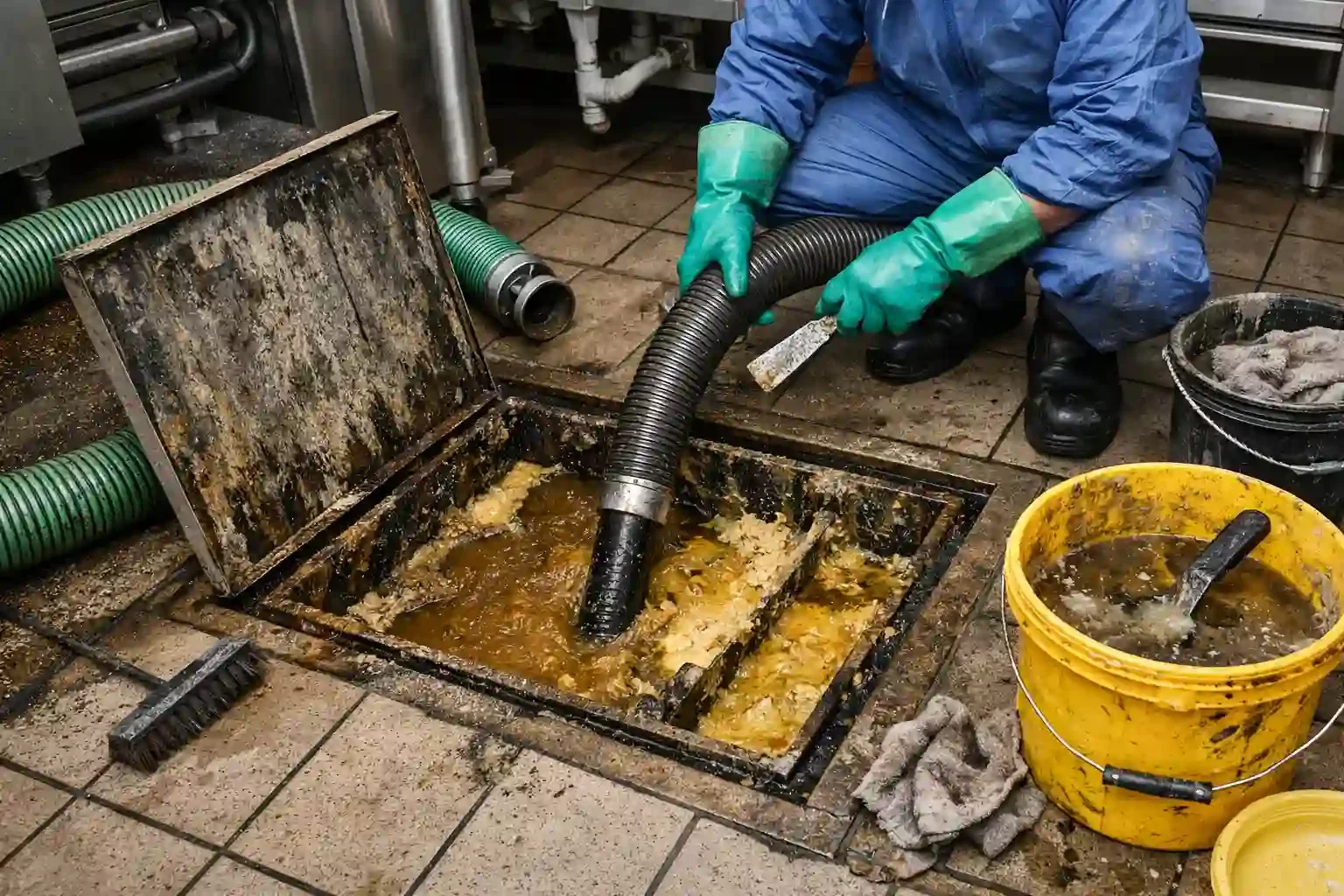
A grease trap separates fats, oils, and grease (FOG) from wastewater before it enters the sewer system. Inside the grease trap is a partition known as a baffle wall.
As wastewater enters the tank:
Fats, oils, and grease float to the surface because they are lighter than water.
The baffle slows the flow of water through the tank.
Grease accumulates on the surface.
Cleaner water passes underneath the baffle.
The treated water exits the grease trap and enters the sewer system.
This simple process prevents grease from entering Water Corporation infrastructure and causing costly sewer blockages.
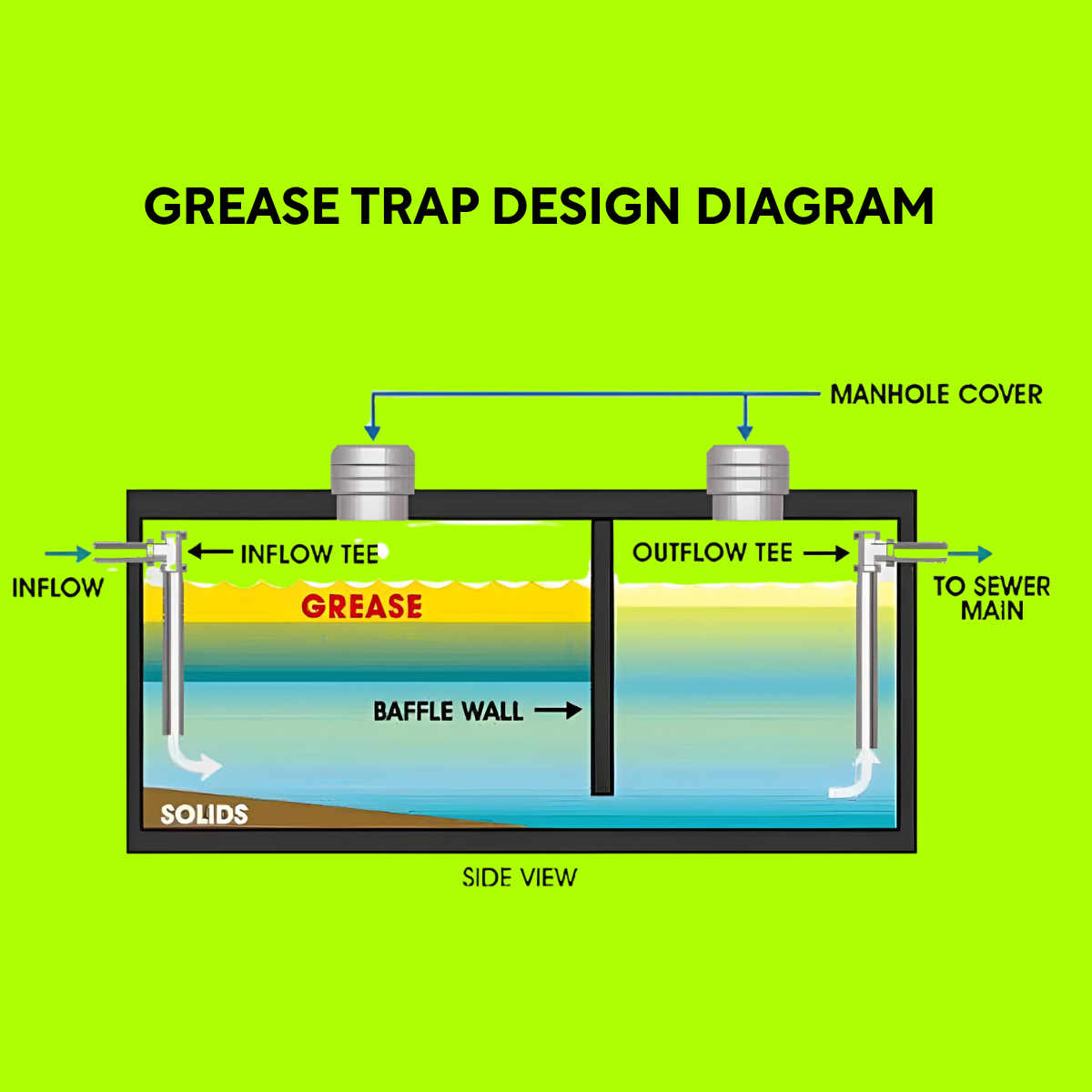
How Does A Grease Trap Work?
WHAT IS THE BEST MATERIAL FOR A GREASE TRAP?
-
HDPE is widely regarded as one of the best materials available for grease trap construction.
-
Lightweight and easy to transport.
Extremely durable.
Corrosion resistant.
Excellent chemical resistance.
Smooth internal surfaces.
Fat and grease are less likely to adhere to the walls.
Long service life.
For most commercial applications, HDPE grease traps offer the best balance between durability, performance, and installation practicality.
Do Grease Traps Smell?
When properly installed and maintained, grease traps should produce very little noticeable odour. Australian regulations require grease traps to be fitted with sealed lids and correctly vented.
However, odours can occur if: Lids are not cleaned properly, seals become damaged, venting is inadequate, pumping schedules are neglected. The strongest odours typically occur during scheduled pump-outs.
FAQ : YOU OUGHTA KNOW…
WHY YOU NEED A GREASE TRAP
Most cafes, restaurants, commercial kitchens, food preparation businesses, bakeries, and hospitality venues are required by Water Corporation to install a grease trap. The primary purpose is to prevent fats, oils, and grease from entering Perth's sewer network.
Without grease traps, fats solidify inside sewer pipes. This can cause :
Sewer blockages.
Property damage.
Environmental issues.
Expensive infrastructure repairs.
Grease traps play a critical role in protecting Perth's wastewater system.
ARE UNDER-BENCH GREASE TRAPS ALLOWED IN WESTERN AUSTRALIA?
Short answer: NO …sorry
Small under-bench grease arrestors are generally not approved by Water Corporation Trade Waste in Western Australia. While these systems are commonly used in some eastern states, they are typically not accepted for commercial trade waste applications in WA.
WHO REGULATES GREASE TRAPS IN PERTH?
Water Corporation Trade Waste is the governing authority responsible for grease trap approvals throughout Perth and Western Australia.
All grease trap installations must comply with applicable Trade Waste requirements and approval processes.
Need A Grease Trap Installed In Perth?
We provide:
✔ Grease Trap Design
✔ Water Corporation Trade Waste Assistance
✔ Above-Ground Grease Traps
✔ Below-Ground Grease Traps
✔ Pump Stations & Lifting Stations
✔ Grease Trap Replacements
✔ Commercial Plumbing Works
✔ Grease Trap Servicing & Maintenance
Whether you're opening a new cafe, upgrading an existing restaurant, replacing a non-compliant grease trap, or responding to a Water Corporation requirement, our team can help.
Contact The Plumbing & Electrical Co today for afree on-site grease trap assessment anywhere in Perth.